Integrating splice-isoform expression into genome-scale models characterizes breast cancer metabolism
Claudio Angione
Abstract
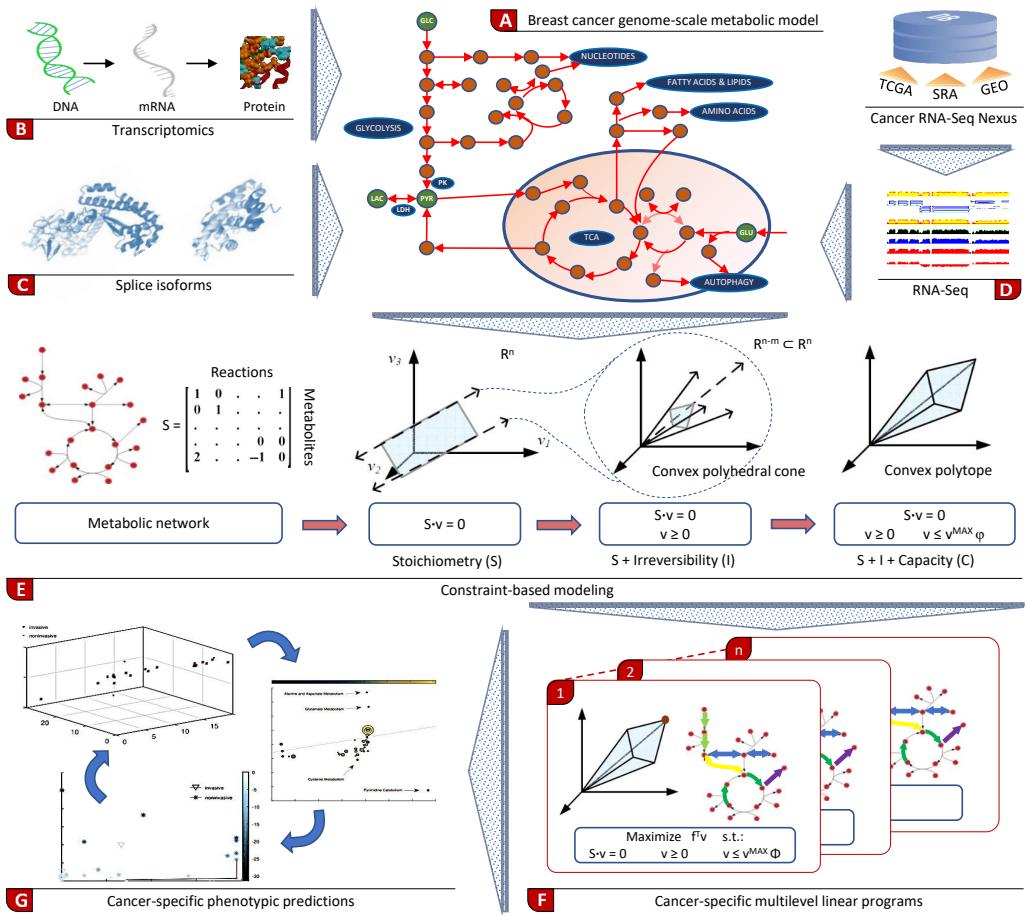
> Abstract. Motivation: Despite being often perceived as the main contributors to cell fate and physiology, genes alone cannot predict cellular phenotype. During the process of gene expression, 95% of human genes can code for multiple proteins due to alternative splicing. While most splice variants of a gene carry the same function, variants within some key genes can have remarkably different roles. To bridge the gap between genotype and phenotype, condition- and tissue-specific models of metabolism have been constructed. However, current metabolic models only include information at the gene level. Consequently, as recently acknowledged by the scientific community, common situations where changes in splice-isoform expression levels alter the metabolic outcome cannot be modeled.
§ The Valyu brief
Reading the full paper and taking notes. This takes a few seconds…
§ Ask this paper
Ask a question about this paper
Valyu reads the full text and answers from what the paper actually says.
Searching the other archives…