Deep Learning for Prediction of Hepatocellular Carcinoma Recurrence After Resection or Liver Transplantation: a Discovery and Validation Study
Zhikun Liu, Yuanpeng Liu, Wenhui Zhang, Hong Yuan, Jinwen Meng, Jianguo Wang, Shusen Zheng, Xiao Xu
Abstract
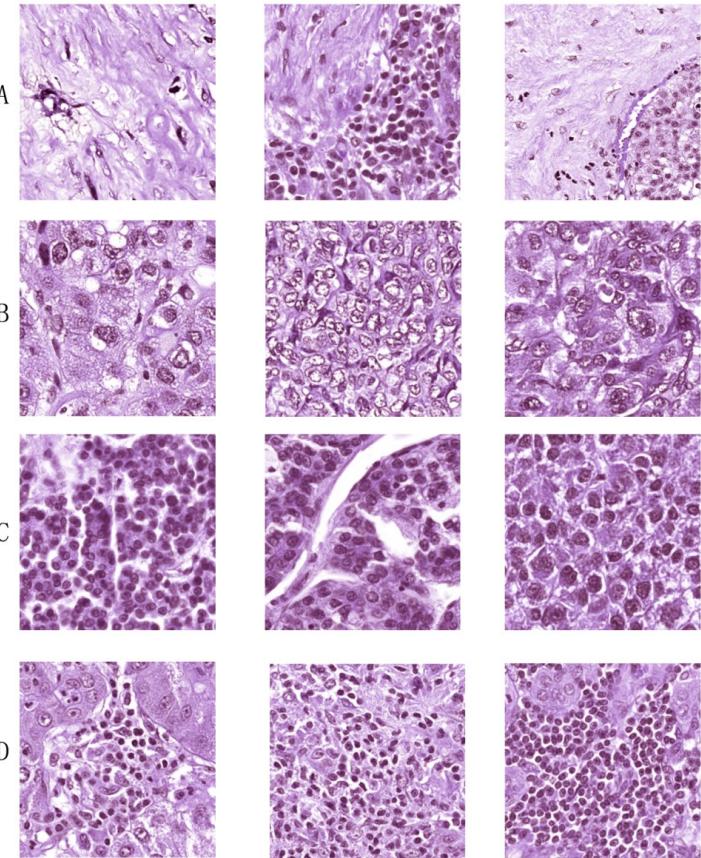
'Jianguo Wang' 'Shusen Zheng' 'Xiao Xu'] Methods: A deep learning model was developed on 1118 patients across four independent cohorts. The Nucleus map set (n=120) was used to train U-net to capture the nuclear architecture. The Train set (n=552) included HCC patients treated by resection and had a distinct outcome. The LT set (n=144) contained patients with HCC treated by LT. The Train set and its nuclear architectural information extracted by U-net were used to train the MobileNet V2 based classifier (MobileNetV2_HCC_Class), purpose-built for classifying supersized heterogeneous images. The classifier was independently tested on the LT set, and then externally validated on the TCGA set (n=302). The primary outcome was recurrence- free survival (RFS).
§ The Valyu brief
Reading the full paper and taking notes. This takes a few seconds…
§ Ask this paper
Ask a question about this paper
Valyu reads the full text and answers from what the paper actually says.
Searching the other archives…