Learning, fast and slow
Markus Meister
Abstract
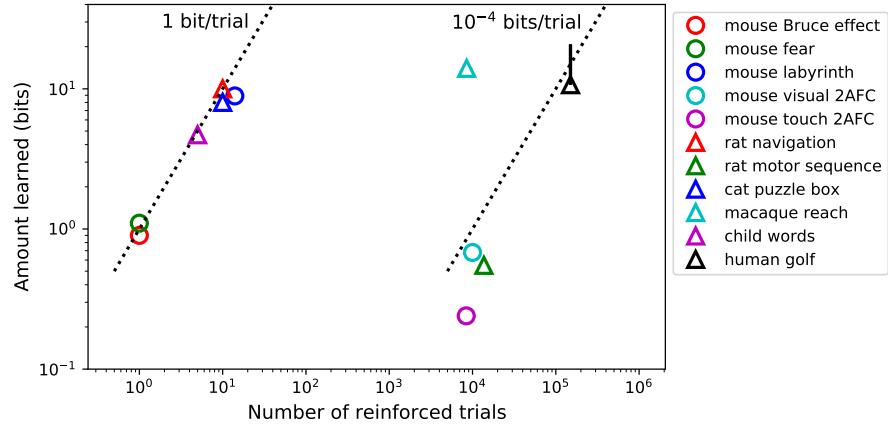
Animals can learn efficiently from a single experience and change their future behavior in response. However, in other instances, animals learn very slowly, requiring thousands of experiences. Here I survey tasks involving fast and slow learning and consider some hypotheses for what differentiates the underlying neural mechanisms. It has been proposed that fast learning relies on neural representations that favor efficient Hebbian modification of synapses. These efficient representations may be encoded in the genome, resulting in a repertoire of fast learning that differs across species. Alternatively, the required neural representations may be acquired from experience through a slow process of unsupervised learning from the environment.
§ The Valyu brief
Reading the full paper and taking notes. This takes a few seconds…
§ Ask this paper
Ask a question about this paper
Valyu reads the full text and answers from what the paper actually says.
Searching the other archives…