A Process for Topic Modelling Via Word Embeddings
Diego Saldaña Ulloa
Abstract
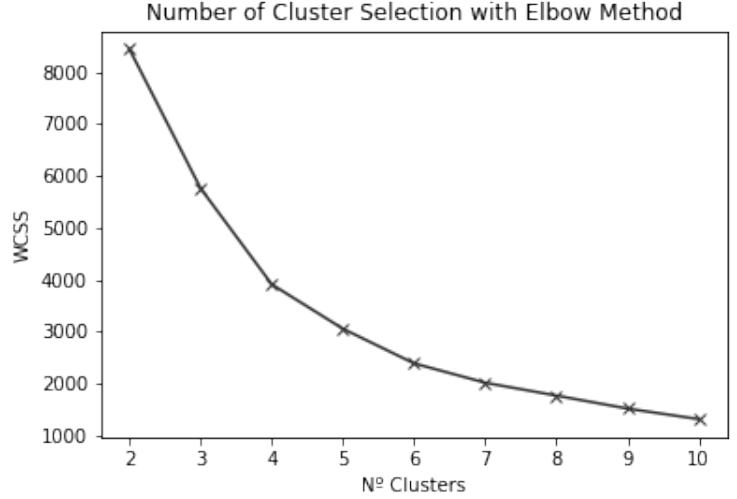
This work combines algorithms based on word embeddings, dimensionality reduction, and clustering. The objective is to obtain topics from a set of unclassified texts. The algorithm to obtain the word embeddings is the BERT model, a neural network architecture widely used in NLP tasks. Due to the high dimensionality, a dimensionality reduction technique called UMAP is used. This method manages to reduce the dimensions while preserving part of the local and global information of the original data. K-Means is used as the clustering algorithm to obtain the topics. Then, the topics are evaluated using the TF-IDF statistics, Topic Diversity, and Topic Coherence to get the meaning of the words on the clusters. The results of the process show good values, so the topic modeling of this process is a viable option for classifying or clustering texts without labels.
§ The Valyu brief
Reading the full paper and taking notes. This takes a few seconds…
§ Ask this paper
Ask a question about this paper
Valyu reads the full text and answers from what the paper actually says.
Searching the other archives…