Nanopore-based direct sequencing of RNA transcripts with 10 different modified nucleotides reveals gaps in existing technology
Joshua T Burdick, Annelise Comai, Alan Bruzel, Guangxin Sun, Peter C Dedon, Vivian G Cheung, R Anholt
Abstract
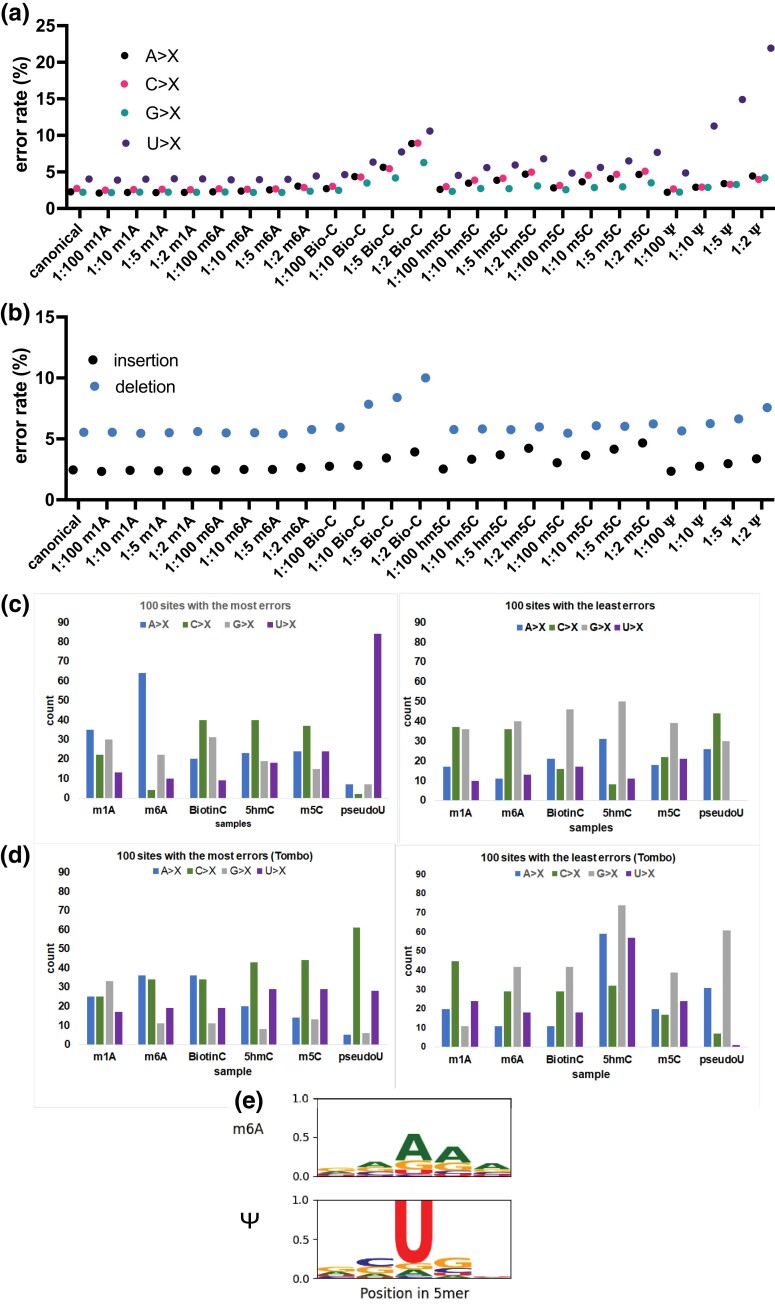
'Peter C Dedon' 'Vivian G Cheung' 'R Anholt'] Title: Abstract RNA undergoes complex posttranscriptional processing including chemical modifications of the nucleotides. The resultant-modified nucleotides are an integral part of RNA sequences that must be considered in studying the biology of RNA and in the design of RNA therapeutics. However, the current “RNA-sequencing” methods primarily sequence complementary DNA rather than RNA itself, which means that the modifications present in RNA are not captured in the sequencing results. Emerging direct RNA-sequencing technologies, such as those offered by Oxford Nanopore, aim to address this limitation. In this study, we synthesized and used Nanopore technology to sequence RNA transcripts consisting of canonical nucleotides and 10 different modifications in various concentrations. The results show that direct RNA sequencing still has a baseline error rate of >10%, and although some modifications can be detected, many remain unidentified. Thus, there is a need to develop sequencing technologies and analysis methods that can comprehensively capture the total complexity of RNA. The RNA sequences obtained through this project are made available for benchmarking analysis methods.
§ The Valyu brief
Reading the full paper and taking notes. This takes a few seconds…
§ Ask this paper
Ask a question about this paper
Valyu reads the full text and answers from what the paper actually says.
Searching the other archives…