Evaluation of the Success of Autogenous Block Grafting in Atrophic Maxillary and Mandibular Ridges Prior to and After Implant Placement
Alexander Muacevic, John R Adler, Joshua Narde, Dhanraj Ganapathy, Kiran Kumar Pandurangan
Abstract
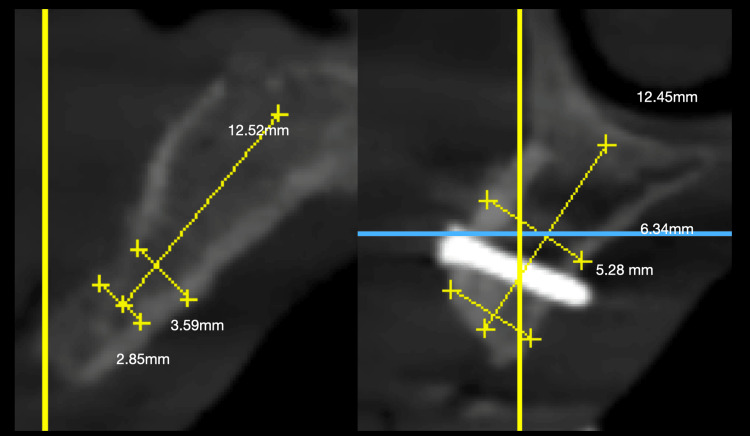
'Kiran Kumar Pandurangan'] Background: Dental implantology's success relies on adequate bone volume and quality, necessitating bone augmentation for implant placement. Primary lateral bone augmentation, utilizing autogenous block grafts, addresses horizontal bone loss. Objective: This study aims to evaluate the efficacy of autogenous block grafting, specifically ramus and fibula blocks, in addressing severe atrophic ridges before and after implant placement. Methods: Twenty-one patients underwent block grafting, predominantly using the ramus technique (80/20 ratio). CBCT measurements assessed horizontal grafting outcomes. Implant success and bone volume changes were analyzed. Results: Post-grafting, bone width increased from 1.8-3.1 mm to 4.5-6 mm, exceeding critical thresholds. Implant success reached 95%, indicating the grafting techniques' effectiveness. Conclusion: Autogenous block grafting, especially with ramus and fibula blocks, transforms severe atrophic ridges, enabling successful implant integration. Long-term follow-up is essential for a comprehensive evaluation. Clinical relevance: This study provides crucial insights into autogenous block grafting's transformative impact on challenging cases, guiding future applications in reconstructive dentistry.
§ The Valyu brief
Reading the full paper and taking notes. This takes a few seconds…
§ Ask this paper
Ask a question about this paper
Valyu reads the full text and answers from what the paper actually says.
Searching the other archives…