Application of recombinase polymerase amplification with lateral flow assay to pathogen point-of-care diagnosis
Yilian Zhao, Yan Wei, Chao Ye, Jinmeng Cao, Xiaoxing Zhou, Mengru Xie, Jilin Qing, Zhizhong Chen
Abstract
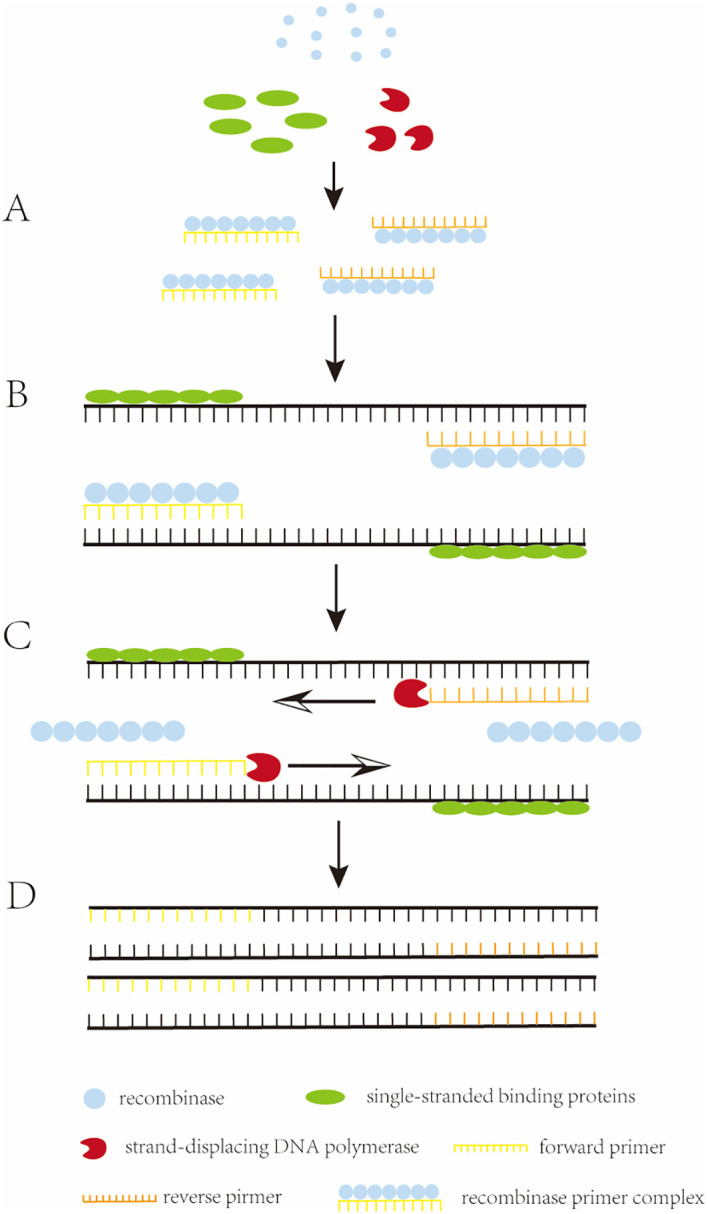
'Mengru Xie' 'Jilin Qing' 'Zhizhong Chen'] Since the outbreak of the new coronavirus, point-of-care diagnostics based on nucleic acid testing have become a requirement for the development of pathogen diagnostics, which require the ability to accurately, rapidly, and conveniently detect pathogens. Conventional nucleic acid amplification techniques no longer meet the requirements for pathogen detection in low-resource, low-skill environments because they require specialist equipment, complex operations, and long detection times. Therefore, recombinant polymerase amplification (RPA) is becoming an increasingly important method in today’s nucleic acid detection technology because it can amplify nucleic acids in 20-30 minutes at a constant temperature, greatly reducing the dependence on specialist equipment and technicians. RPA products are primarily detected through methods such as real-time fluorescence, gel electrophoresis, lateral flow assays (LFAs), and other techniques. Among these, LFAs allow for the rapid detection of amplification products within minutes through the visualization of results, offering convenient operation and low cost. Therefore, the combination of RPA with LFA technology has significant advantages and holds broad application prospects in point-of-care (POC) diagnostics, particularly in low-resource settings. Here, we focus on the principles of RPA combined with LFAs, their application to pathogen diagnosis, their main advantages and limitations, and some improvements in the methods.
§ The Valyu brief
Reading the full paper and taking notes. This takes a few seconds…
§ Ask this paper
Ask a question about this paper
Valyu reads the full text and answers from what the paper actually says.
Searching the other archives…