Predictive coding and attention in developmental cognitive neuroscience and perspectives for neurodevelopmental disorders
Anne-Lise Marais, Nadege Roche-Labarbe
Abstract
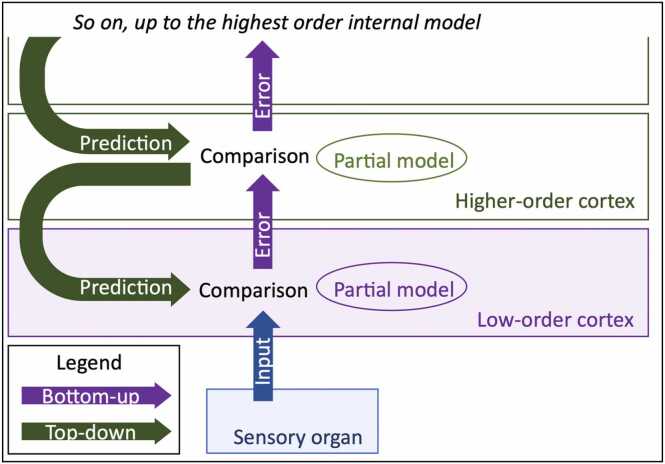
Sensory prediction and repetition suppression are closely related cognitive mechanisms that allow the brain to form predictions about the environment, and guide perception in synergy with attention. Predictive coding is a theory of the fundamental role of predictive mechanisms in brain functions. Authors have proposed a central role of predictive impairments in autism and possibly other neurodevelopmental disorders. However, little is known about predictive mechanisms in typical development, and how they co-develop with attention. Here we review experimental support for predictive coding and its links with attention in healthy adults’ brains, the first experimental works performed in typically developing children and infants, and theoretical accounts of neurodevelopmental disorders using a predictive coding framework. We propose future directions for predictive coding research in development. Finally, we describe the first predictive coding experiments in neonates and provide research perspectives for using this framework in searching for early markers of atypical neurodevelopment.
§ The Valyu brief
Reading the full paper and taking notes. This takes a few seconds…
§ Ask this paper
Ask a question about this paper
Valyu reads the full text and answers from what the paper actually says.
Searching the other archives…