Implicating neuroinflammation in hippocampus, prefrontal cortex and amygdala with cognitive deficit: a narrative review
Vandana Blossom, Sheetal D. Ullal, Melisha M. D’Souza, Anu V. Ranade, Nayanatara A. Kumar, Rajalakshmi Rai
Abstract
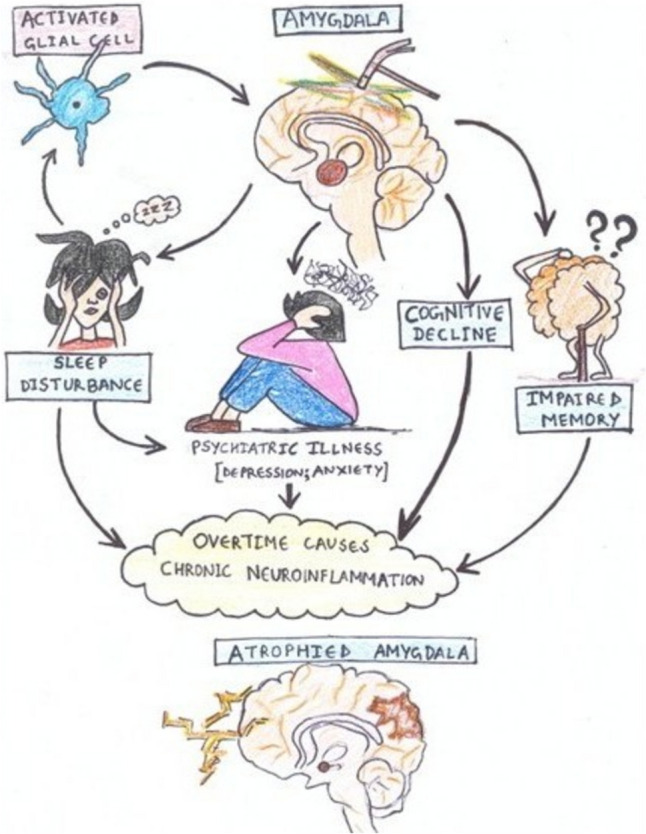
'Nayanatara A. Kumar' 'Rajalakshmi Rai'] Neuroinflammation is known to be a contributing factor for several neurological disorders as well as cognitive dysfunction. Different signalling pathways, and a variety of supporting cells of CNS are suggested to be involved in the progression of neurodegeneration. Among the factors contributing to neuroinflammation, peripheral inflammation takes a lead role according to recent research, since persistent peripheral inflammation is believed to disrupt the blood-brain barrier (BBB). This, in turn, allows the peripheral immune cells to infiltrate the central nervous system (CNS), triggering a chronic inflammatory response. Microglia and astrocytes, the key glial cells in the CNS, become overactivated, resulting in the unwarranted generation of the proinflammatory cytokines, such as TNF- α, IL- 1β, and the IL-6. While acute neuroinflammation is initially beneficial in repairing neuronal damage, prolonged activation contributes to the oxidative stress, mitochondrial dysfunction, protein aggregation and neural degeneration. The dysregulation of the neuroinflammatory process is likened to the deposition of the amyloid precursor proteins (APP), tau pathology and the synaptic dysfunction, ultimately impairing cognitive function. Key brain regions like the hippocampus, prefrontal cortex and amygdala are particularly vulnerable to neuroinflammatory damage. Chronic inflammation in these areas disrupts synaptic plasticity, neurogenesis and neurotransmitter stability, leading to cognitive decline and several neurological disorders. Understanding the regional specificity of neuroinflammatory responses provides valuable insights into mechanisms underlining cognitive impairment. Multifaceted treatment approaches like improvement in the delivery of drugs across the BBB, disease-specific cytokine centred treatment and improving the gut microbial environment with lifestyle changes would help in inhibiting the progression of neuroinflammation and associated cognitive dysfunction in various neurodegenerative diseases.
§ The Valyu brief
Reading the full paper and taking notes. This takes a few seconds…
§ Ask this paper
Ask a question about this paper
Valyu reads the full text and answers from what the paper actually says.
Searching the other archives…