Clinicopathological significance of homeoprotein Six1 in hepatocellular carcinoma The role of Six1 in hepatocellular carcinoma
K T Ng, K Man, C K Sun, T K Lee, R T Poon, C-M Lo, S-T Fan
Abstract
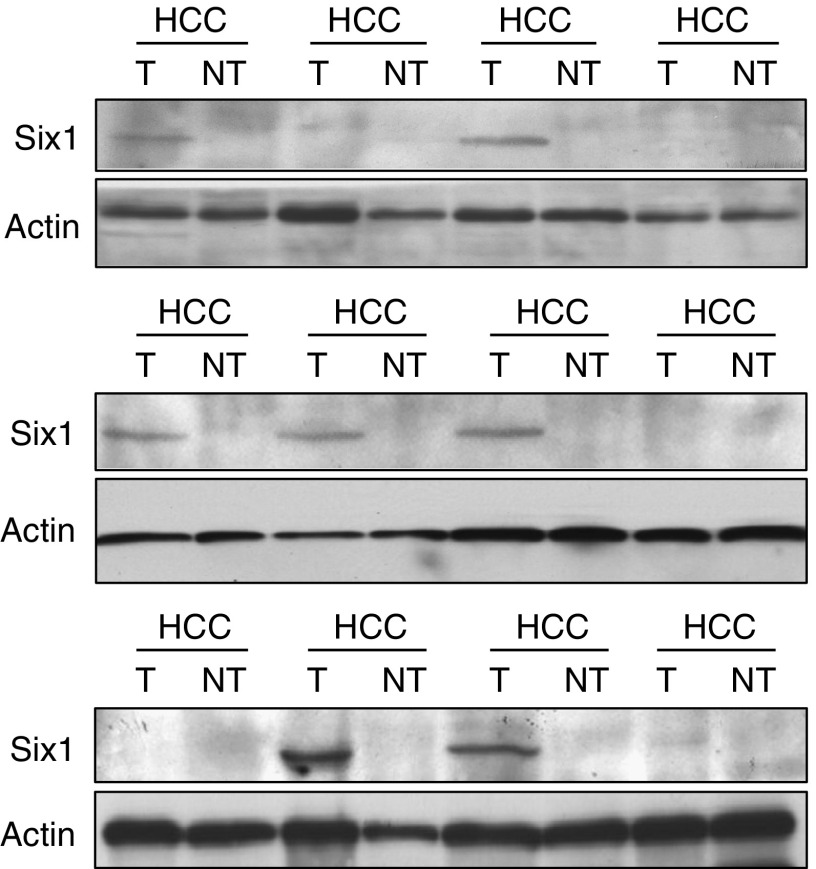
Tumour recurrence and metastases of hepatocellular carcinoma (HCC) after hepatectomy are the major obstacles of long-term survival. The present study investigated the clinicopathological significance of a possible metastasis regulator Six1 in HCC patients who were undergone hepatectomy. Seventy-two pairs of RNA and 103 pairs of protein from tumour and adjacent nontumour liver tissues of HCC patients were examined. About 85 and 60% of HCC tumour tissues were found to overexpress Six1 mRNA and protein, respectively, compared with nontumour liver tissues. No Six1 protein was detected in HCC nontumour liver tissues and normal liver tissues. Increased Six1 protein expression in HCC patients was significantly correlated with pathologic tumour-node-metastasis (pTNM) stage (P=0.002), venous infiltration (P=0.004) and poor overall survival (P=0.0423). We concluded that Six1 is frequently overexpressed in HCC patients and elevated Six1 protein in HCC patients may be an indication of advanced stage and poor overall survival after hepatectomy.
§ The Valyu brief
Reading the full paper and taking notes. This takes a few seconds…
§ Ask this paper
Ask a question about this paper
Valyu reads the full text and answers from what the paper actually says.
Searching the other archives…