Ductal carcinoma <i> in situ </i> of the breast: morphological and molecular features implicated in progression Progression of ductal carcinoma <i> in situ </i> D. M. Carraro, E. V. Elias and V. P. Andrade
Dirce M. Carraro, Eliana V. Elias, Victor P. Andrade
Abstract
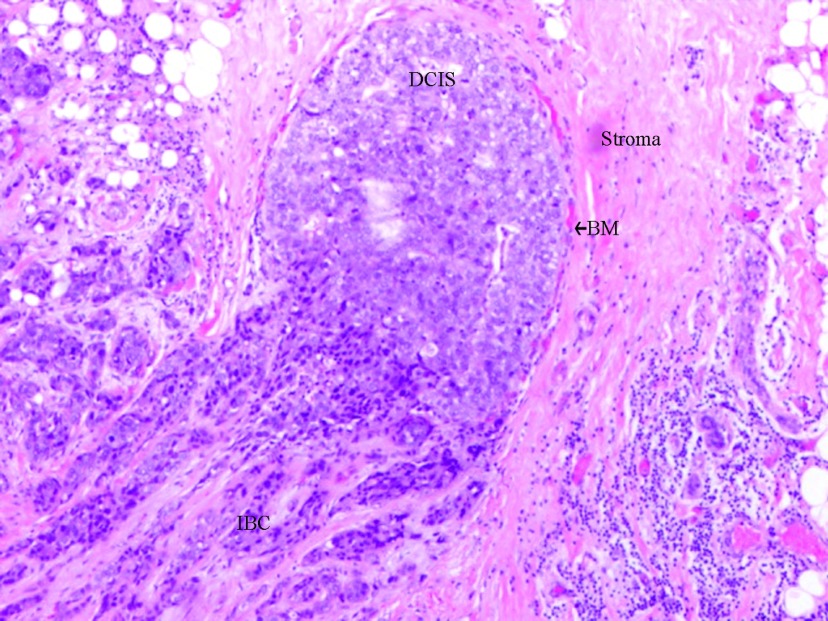
The spread of mammographic screening programmes around the world, including in developing countries, has substantially contributed to the diagnosis of small non-palpable lesions, which has increased the detection rate of DCIS (ductal carcinoma in situ). DCIS is heterogeneous in several ways, such as its clinical presentation, morphology and genomic profile. Excellent outcomes have been reported; however, many questions remain unanswered. For example, which patients groups are overtreated and could instead benefit from minimal intervention and which patient groups require a more traditional multidisciplinary approach. The development of a comprehensive integrated analysis that includes the radiological, morphological and genetic aspects of DCIS is necessary to answer these questions. This review focuses on discussing the significant findings about the morphological and molecular features of DCIS and its progression that have helped to uncover the biological and genetic heterogeneity of this disease. The knowledge gained in recent years might allow the development of tailored clinical management for women with DCIS in the future.
§ The Valyu brief
Reading the full paper and taking notes. This takes a few seconds…
§ Ask this paper
Ask a question about this paper
Valyu reads the full text and answers from what the paper actually says.
Searching the other archives…