Comparison of Pre-Analytical FFPE Sample Preparation Methods and Their Impact on Massively Parallel Sequencing in Routine Diagnostics Comparison of Pre-Analytical FFPE Sample Preparation Methods
Carina Heydt, Jana Fassunke, Helen Künstlinger, Michaela Angelika Ihle, Katharina König, Lukas Carl Heukamp, Hans-Ulrich Schildhaus, Margarete Odenthal, Reinhard Büttner, Sabine Merkelbach-Bruse, Monika Bradl
Abstract
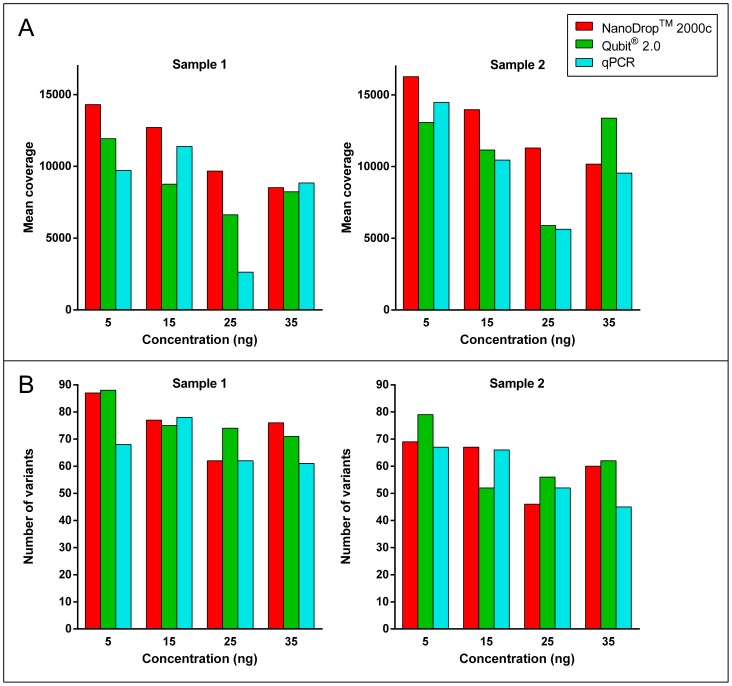
'Michaela Angelika Ihle' 'Katharina König' 'Lukas Carl Heukamp' 'Hans-Ulrich Schildhaus' 'Margarete Odenthal' 'Reinhard Büttner' 'Sabine Merkelbach-Bruse' 'Monika Bradl'] Over the last years, massively parallel sequencing has rapidly evolved and has now transitioned into molecular pathology routine laboratories. It is an attractive platform for analysing multiple genes at the same time with very little input material. Therefore, the need for high quality DNA obtained from automated DNA extraction systems has increased, especially to those laboratories which are dealing with formalin-fixed paraffin-embedded (FFPE) material and high sample throughput. This study evaluated five automated FFPE DNA extraction systems as well as five DNA quantification systems using the three most common techniques, UV spectrophotometry, fluorescent dye-based quantification and quantitative PCR, on 26 FFPE tissue samples. Additionally, the effects on downstream applications were analysed to find the most suitable pre-analytical methods for massively parallel sequencing in routine diagnostics. The results revealed that the Maxwell 16 from Promega (Mannheim, Germany) seems to be the superior system for DNA extraction from FFPE material. The extracts had a 1.3-24.6-fold higher DNA concentration in comparison to the other extraction systems, a higher quality and were most suitable for downstream applications. The comparison of the five quantification methods showed intermethod variations but all methods could be used to estimate the right amount for PCR amplification and for massively parallel sequencing. Interestingly, the best results in massively parallel sequencing were obtained with a DNA input of 15 ng determined by the NanoDrop 2000c spectrophotometer (Thermo Fisher Scientific, Waltham, MA, USA). No difference could be detected in mutation analysis based on the results of the quantification methods.
§ The Valyu brief
Reading the full paper and taking notes. This takes a few seconds…
§ Ask this paper
Ask a question about this paper
Valyu reads the full text and answers from what the paper actually says.
Searching the other archives…