Hemichannel composition and electrical synaptic transmission: molecular diversity and its implications for electrical rectification
Nicolás Palacios-Prado, Wolf Huetteroth, Alberto E. Pereda
Abstract
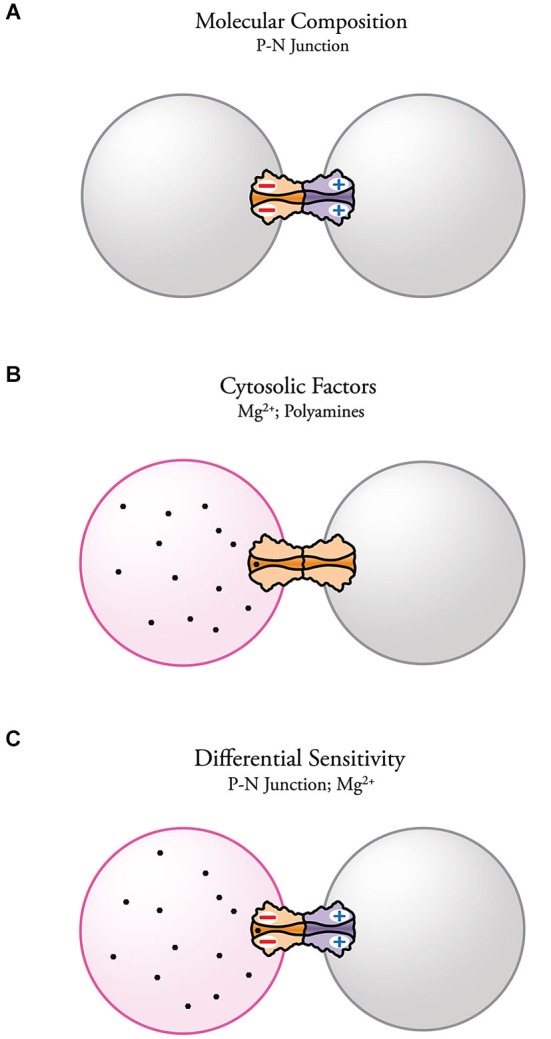
Unapposed hemichannels (HCs) formed by hexamers of gap junction proteins are now known to be involved in various cellular processes under both physiological and pathological conditions. On the other hand, less is known regarding how differences in the molecular composition of HCs impact electrical synaptic transmission between neurons when they form intercellular heterotypic gap junctions (GJs). Here we review data indicating that molecular differences between apposed HCs at electrical synapses are generally associated with rectification of electrical transmission. Furthermore, this association has been observed at both innexin and connexin (Cx) based electrical synapses. We discuss the possible molecular mechanisms underlying electrical rectification, as well as the potential contribution of intracellular soluble factors to this phenomenon. We conclude that asymmetries in molecular composition and sensitivity to cellular factors of each contributing hemichannel can profoundly influence the transmission of electrical signals, endowing electrical synapses with more complex functional properties.
§ The Valyu brief
Reading the full paper and taking notes. This takes a few seconds…
§ Ask this paper
Ask a question about this paper
Valyu reads the full text and answers from what the paper actually says.
Searching the other archives…