The Intolerance of Regulatory Sequence to Genetic Variation Predicts Gene Dosage Sensitivity Intolerant Regulatory Sequence and Gene Dosage
Slavé Petrovski, Ayal B. Gussow, Quanli Wang, Matt Halvorsen, Yujun Han, William H. Weir, Andrew S. Allen, David B. Goldstein, Chris Cotsapas
Abstract
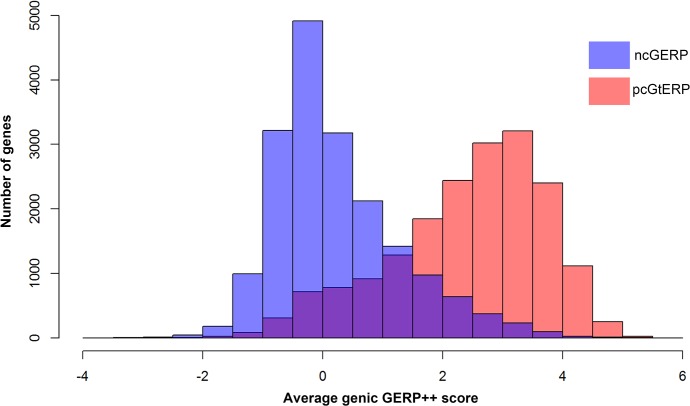
'Yujun Han' 'William H. Weir' 'Andrew S. Allen' 'David B. Goldstein' 'Chris Cotsapas'] Noncoding sequence contains pathogenic mutations. Yet, compared with mutations in protein-coding sequence, pathogenic regulatory mutations are notoriously difficult to recognize. Most fundamentally, we are not yet adept at recognizing the sequence stretches in the human genome that are most important in regulating the expression of genes. For this reason, it is difficult to apply to the regulatory regions the same kinds of analytical paradigms that are being successfully applied to identify mutations among protein-coding regions that influence risk. To determine whether dosage sensitive genes have distinct patterns among their noncoding sequence, we present two primary approaches that focus solely on a gene’s proximal noncoding regulatory sequence. The first approach is a regulatory sequence analogue of the recently introduced residual variation intolerance score (RVIS), termed noncoding RVIS, or ncRVIS. The ncRVIS compares observed and predicted levels of standing variation in the regulatory sequence of human genes. The second approach, termed ncGERP, reflects the phylogenetic conservation of a gene’s regulatory sequence using GERP++. We assess how well these two approaches correlate with four gene lists that use different ways to identify genes known or likely to cause disease through changes in expression: 1) genes that are known to cause disease through haploinsufficiency, 2) genes curated as dosage sensitive in ClinGen’s Genome Dosage Map, 3) genes judged likely to be under purifying selection for mutations that change expression levels because they are statistically depleted of loss-of-function variants in the general population, and 4) genes judged unlikely to cause disease based on the presence of copy number variants in the general population. We find that both noncoding scores are highly predictive of dosage sensitivity using any of these criteria.
§ The Valyu brief
Reading the full paper and taking notes. This takes a few seconds…
§ Ask this paper
Ask a question about this paper
Valyu reads the full text and answers from what the paper actually says.
Searching the other archives…