Difference in Restricted Mean Survival Time for Cost-Effectiveness Analysis Using Individual Patient Data Meta-Analysis: Evidence from a Case Study Difference in Restricted Mean Survival Time and IPD-MA
Béranger Lueza, Audrey Mauguen, Jean-Pierre Pignon, Oliver Rivero-Arias, Julia Bonastre, Robert K Hills
Abstract
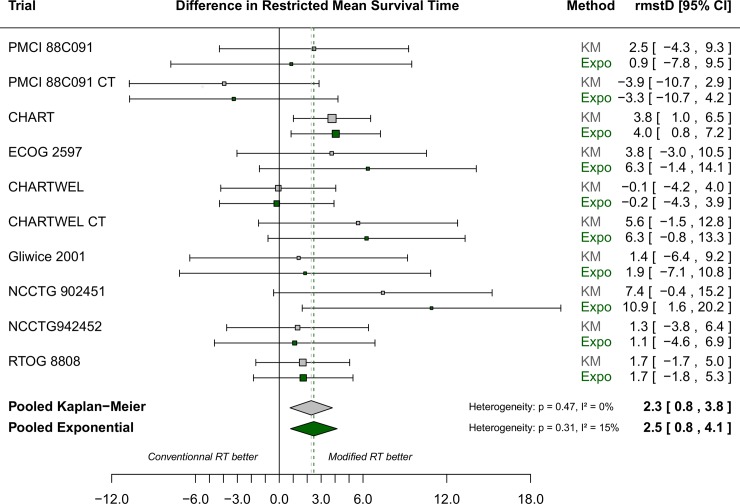
The individual patient data meta-analysis (IPD-MA) has become the gold standard for obtaining the best evidence for treatment effects (e.g. see ). The aim of an IPD-MA is to estimate a pooled treatment effect from the aggregation of data from all randomised controlled trials (RCTs) that investigated the same clinical question . This pooled treatment effect is a relative outcome measure often expressed for survival data as a pooled hazard ratio. By contrast, economic evaluation uses an absolute outcome measure such as the number of life-years gained associated with the experimental treatment .
§ The Valyu brief
Reading the full paper and taking notes. This takes a few seconds…
§ Ask this paper
Ask a question about this paper
Valyu reads the full text and answers from what the paper actually says.
Searching the other archives…