AMModels: An R package for storing models, data, and metadata to facilitate adaptive management AMModels: An R package for storing models, data, and metadata to facilitate adaptive management
Therese M. Donovan, Jonathan E. Katz, Esmaeil Ebrahimie
Abstract
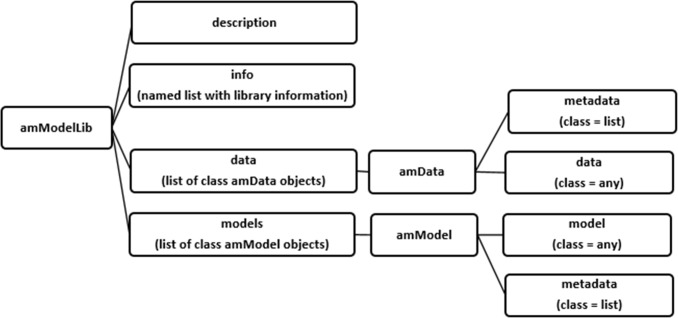
Agencies are increasingly called upon to implement their natural resource management programs within an adaptive management (AM) framework. This article provides the background and motivation for the R package, AMModels. AMModels was developed under R version 3.2.2. The overall goal of AMModels is simple: To codify knowledge in the form of models and to store it, along with models generated from numerous analyses and datasets that may come our way, so that it can be used or recalled in the future. AMModels facilitates this process by storing all models and datasets in a single object that can be saved to an .RData file and routinely augmented to track changes in knowledge through time. Through this process, AMModels allows the capture, development, sharing, and use of knowledge that may help organizations achieve their mission. While AMModels was designed to facilitate adaptive management, its utility is far more general. Many R packages exist for creating and summarizing models, but to our knowledge, AMModels is the only package dedicated not to the mechanics of analysis but to organizing analysis inputs, analysis outputs, and preserving descriptive metadata. We anticipate that this package will assist users hoping to preserve the key elements of an analysis so they may be more confidently revisited at a later date.
§ The Valyu brief
Reading the full paper and taking notes. This takes a few seconds…
§ Ask this paper
Ask a question about this paper
Valyu reads the full text and answers from what the paper actually says.
Searching the other archives…