Focus on Chronic Exposure for Deriving Drinking Water Guidance Underestimates Potential Risk to Infants
Helen Goeden
Abstract
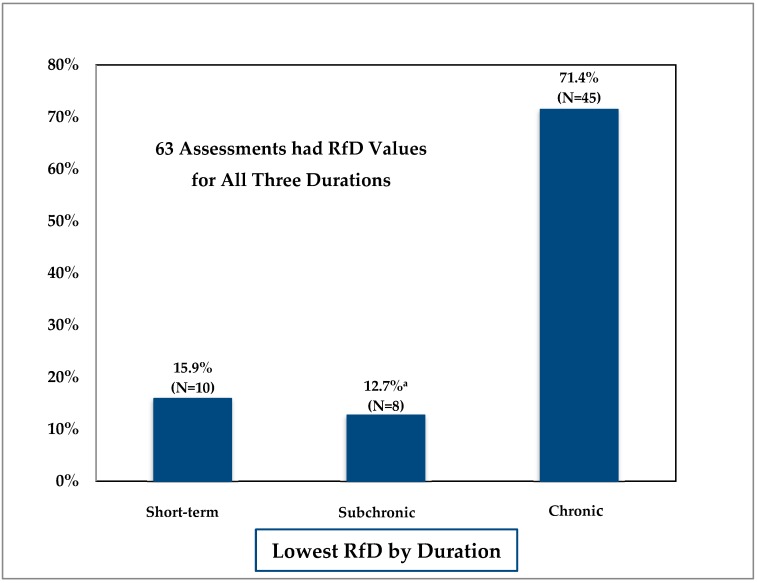
In 2007, the Minnesota Department of Health (MDH) developed new risk assessment methods for deriving human health-based water guidance (HBG) that incorporated the assessment of multiple exposure durations and life stages. The methodology is based on US Environmental Protection Agency recommendations for protecting children’s health (US EPA 2002). Over the last 10 years, the MDH has derived multiple duration (e.g., short-term, subchronic, and chronic) water guidance for over 60 chemicals. This effort involved derivation of multiple duration reference doses (RfDs) and selection of corresponding water intake rates (e.g., infant, child, and lifetime). As expected, RfDs typically decreased with increasing exposure duration. However, the corresponding HBG frequently did not decrease with increasing duration. For more than half of the chemicals, the shorter duration HBG was lower than chronic HBG value. Conventional wisdom has been that chronic-based values will be the most conservative and will therefore be protective of less than chronic exposures. However, the MDH’s experience highlights the importance of evaluating short-term exposures. For many chemicals, elevated intake rates early in life, coupled with short-term RfDs, resulted in the lowest HBG. Drinking water criteria based on chronic assessments may not be protective of short-term exposures in highly exposed populations such as formula-fed infants.
§ The Valyu brief
Reading the full paper and taking notes. This takes a few seconds…
§ Ask this paper
Ask a question about this paper
Valyu reads the full text and answers from what the paper actually says.
Searching the other archives…