On the apparent decrease in Olympic sprinter reaction times On the apparent decrease in Olympic sprinter reaction times
Payam Mirshams Shahshahani, David B. Lipps, Andrzej T. Galecki, James A. Ashton-Miller, Maria Francesca Piacentini
Abstract
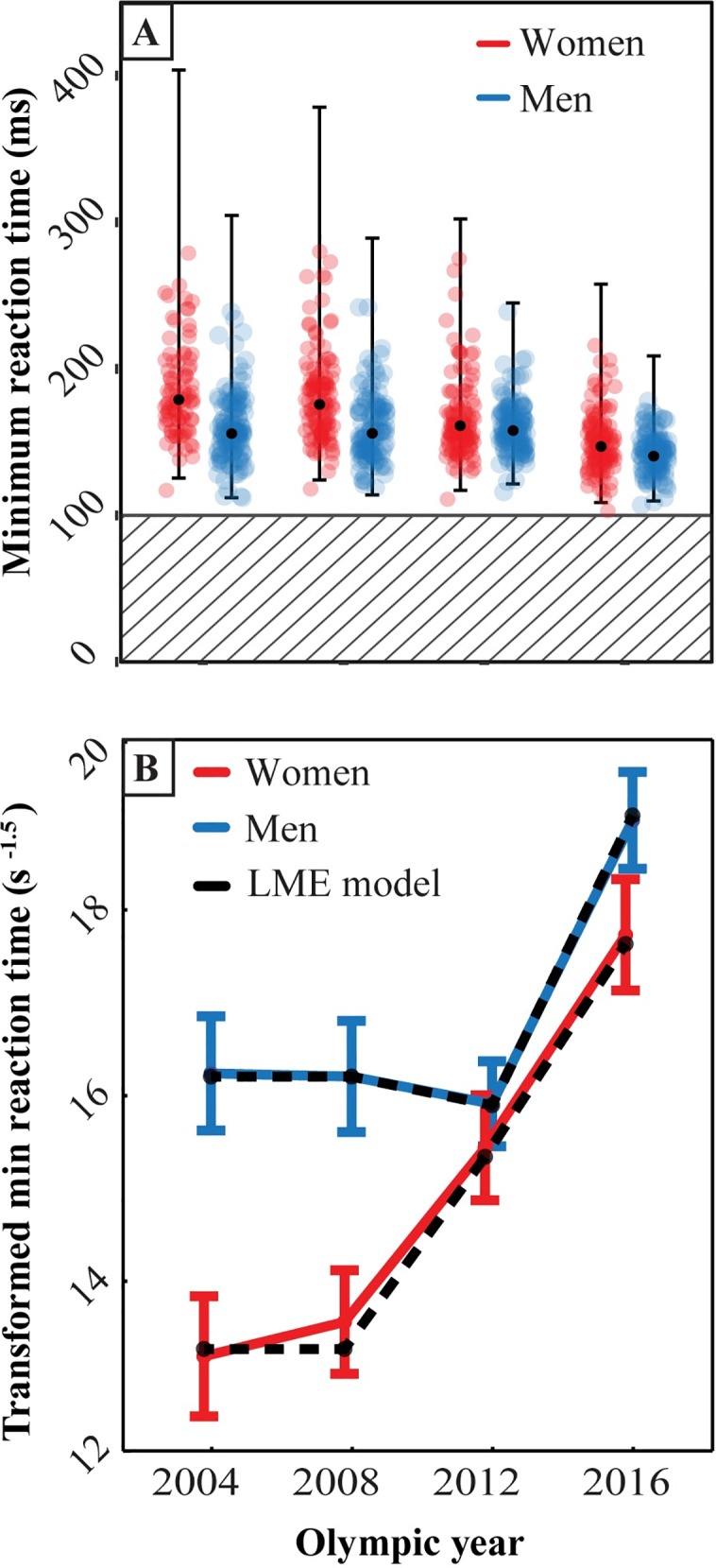
'James A. Ashton-Miller' 'Maria Francesca Piacentini'] Reaction times of Olympic sprinters provide insights into the most rapid of human response times. To determine whether minimum reaction times have changed as athlete training has become ever more specialized, we analyzed the results from the Olympic Games between 2004 and 2016. The results for the 100 m and 110 m hurdle events show that minimum reaction times have systematically decreased between 2004 and 2016 for both sexes, with women showing a marked decrease since 2008 that eliminated the sex difference in 2012. Because overall race times have not systematically decreased between 2004 and 2016, the most likely explanation for the apparent decrease in reaction times is a reduction in the proprietary force thresholds used to calculate the reaction times based on force sensors in starting blocks-and not the result of more specialized or effective training.
§ The Valyu brief
Reading the full paper and taking notes. This takes a few seconds…
§ Ask this paper
Ask a question about this paper
Valyu reads the full text and answers from what the paper actually says.
Searching the other archives…