Towards the Recognition of the Emotions of People with Visual Disabilities through Brain–Computer Interfaces
Jesús Leonardo López-Hernández, Israel González-Carrasco, José Luis López-Cuadrado, Belén Ruiz-Mezcua
Abstract
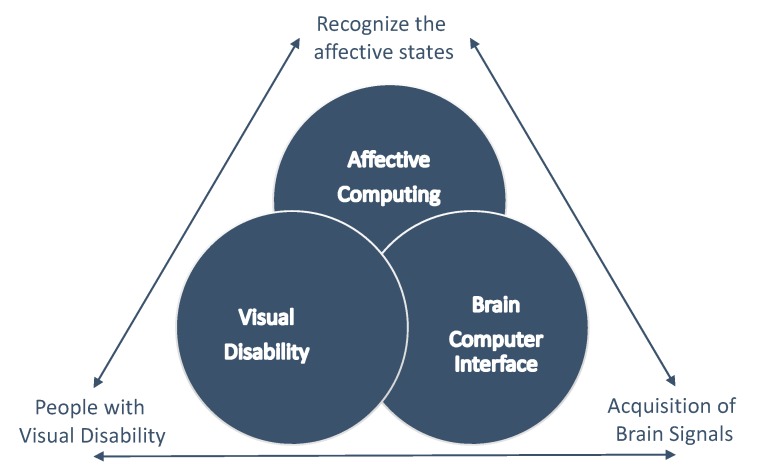
'José Luis López-Cuadrado' 'Belén Ruiz-Mezcua'] A brain-computer interface is an alternative for communication between people and computers, through the acquisition and analysis of brain signals. Research related to this field has focused on serving people with different types of motor, visual or auditory disabilities. On the other hand, affective computing studies and extracts information about the emotional state of a person in certain situations, an important aspect for the interaction between people and the computer. In particular, this manuscript considers people with visual disabilities and their need for personalized systems that prioritize their disability and the degree that affects them. In this article, a review of the state of the techniques is presented, where the importance of the study of the emotions of people with visual disabilities, and the possibility of representing those emotions through a brain-computer interface and affective computing, are discussed. Finally, the authors propose a framework to study and evaluate the possibility of representing and interpreting the emotions of people with visual disabilities for improving their experience with the use of technology and their integration into today’s society.
§ The Valyu brief
Reading the full paper and taking notes. This takes a few seconds…
§ Ask this paper
Ask a question about this paper
Valyu reads the full text and answers from what the paper actually says.
Searching the other archives…