Targeting Regulatory T Cells by Addressing Tumor Necrosis Factor and Its Receptors in Allogeneic Hematopoietic Cell Transplantation and Cancer
Harald Wajant, Andreas Beilhack
Abstract
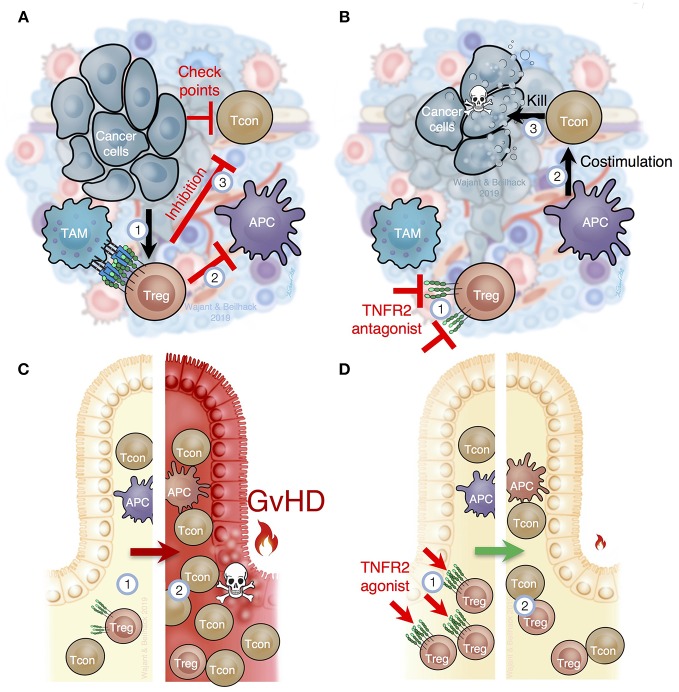
An intricate network of molecular and cellular actors orchestrates the delicate balance between effector immune responses and immune tolerance. The pleiotropic cytokine tumor necrosis factor-alpha (TNF) proves as a pivotal protagonist promoting but also suppressing immune responses. These opposite actions are accomplished through specialist cell types responding to TNF via TNF receptors TNFR1 and TNFR2. Recent findings highlight the importance of TNFR2 as a key regulator of activated natural FoxP3+ regulatory T cells (Tregs) in inflammatory conditions, such as acute graft-vs.-host disease (GvHD) and the tumor microenvironment. Here we review recent advances in our understanding of TNFR2 signaling in T cells and discuss how these can reconcile seemingly conflicting observations when manipulating TNF and TNFRs. As TNFR2 emerges as a new and attractive target we furthermore pinpoint strategies and potential pitfalls for therapeutic targeting of TNFR2 for cancer treatment and immune tolerance after allogeneic hematopoietic cell transplantation.
§ The Valyu brief
Reading the full paper and taking notes. This takes a few seconds…
§ Ask this paper
Ask a question about this paper
Valyu reads the full text and answers from what the paper actually says.
Searching the other archives…