Novel phylogenetic methods are needed for understanding gene function in the era of mega-scale genome sequencing
László G Nagy, Zsolt Merényi, Botond Hegedüs, Balázs Bálint
Abstract
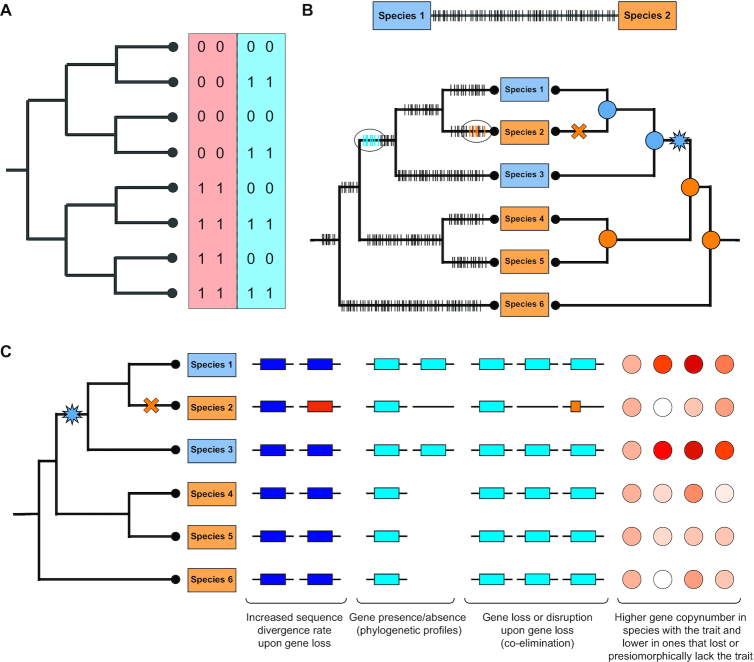
Ongoing large-scale genome sequencing projects are forecasting a data deluge that will almost certainly overwhelm current analytical capabilities of evolutionary genomics. In contrast to population genomics, there are no standardized methods in evolutionary genomics for extracting evolutionary and functional (e.g. gene-trait association) signal from genomic data. Here, we examine how current practices of multi-species comparative genomics perform in this aspect and point out that many genomic datasets are under-utilized due to the lack of powerful methodologies. As a result, many current analyses emphasize gene families for which some functional data is already available, resulting in a growing gap between functionally well-characterized genes/organisms and the universe of unknowns. This leaves unknown genes on the ‘dark side’ of genomes, a problem that will not be mitigated by sequencing more and more genomes, unless we develop tools to infer functional hypotheses for unknown genes in a systematic manner. We provide an inventory of recently developed methods capable of predicting gene-gene and gene-trait associations based on comparative data, then argue that realizing the full potential of whole genome datasets requires the integration of phylogenetic comparative methods into genomics, a rich but underutilized toolbox for looking into the past.
§ The Valyu brief
Reading the full paper and taking notes. This takes a few seconds…
§ Ask this paper
Ask a question about this paper
Valyu reads the full text and answers from what the paper actually says.
Searching the other archives…