From Evaluation to Prediction: Behavioral Effects and Biological Markers of Cognitive Control Intervention
Bin Xuan
Abstract
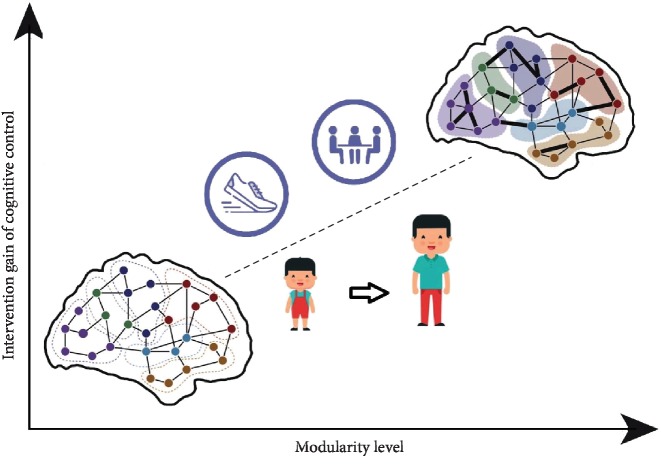
Although the intervention effectiveness of cognitive control is disputed, some methods, such as single-task training, integrated training, meditation, aerobic exercise, and transcranial stimulation, have been reported to improve cognitive control. This review of recent advances from evaluation to prediction of cognitive control interventions suggests that brain modularity may be an important candidate marker for informing clinical decisions regarding suitable interventions. The intervention effect of cognitive control has been evaluated by behavioral performance, transfer effect, brain structure and function, and brain networks. Brain modularity can predict the benefits of cognitive control interventions based on individual differences and is independent of intervention method, group, age, initial cognitive ability, and education level. The prediction of cognitive control intervention based on brain modularity should extend to task states, combine function and structure networks, and assign different weights to subnetwork modularity.
§ The Valyu brief
Reading the full paper and taking notes. This takes a few seconds…
§ Ask this paper
Ask a question about this paper
Valyu reads the full text and answers from what the paper actually says.
Searching the other archives…