Self-Regulation of SMR Power Led to an Enhancement of Functional Connectivity of Somatomotor Cortices in Fibromyalgia Patients
Juan L. Terrasa, Alfonso Barros-Loscertales, Pedro Montoya, Miguel A. Muñoz
Abstract
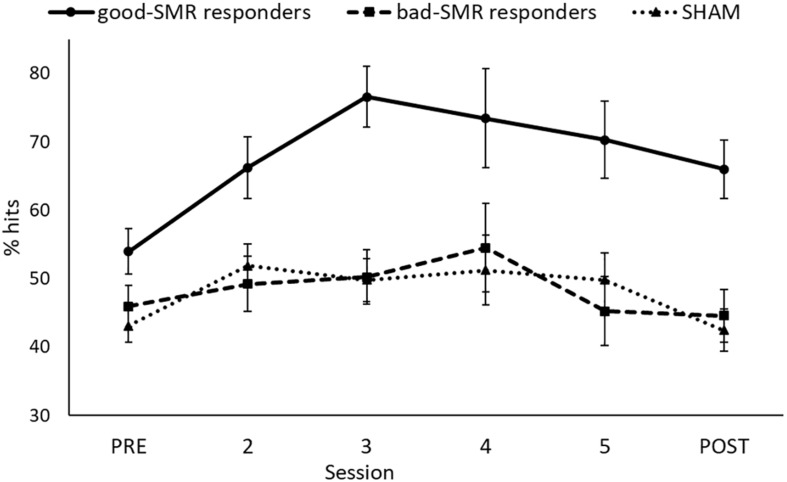
'Miguel A. Muñoz'] Neuroimaging studies have demonstrated that altered activity in somatosensory and motor cortices play a key role in pain chronification. Neurofeedback training of sensorimotor rhythm (SMR) is a tool which allow individuals to self-modulate their brain activity and to produce significant changes over somatomotor brain areas. Several studies have further shown that neurofeedback training may reduce pain and other pain-related symptoms in chronic pain patients. The goal of the present study was to analyze changes in SMR power and brain functional connectivity of the somatosensory and motor cortices elicited by neurofeedback task designed to both synchronize and desynchronize the SMR power over motor and somatosensory areas in fibromyalgia patients. Seventeen patients were randomly assigned to the SMR training (n = 9) or to a sham protocol (n = 8). All participants were trained during 6 sessions, and fMRI and EEG power elicited by synchronization and desynchronization trials were analyzed. In the SMR training group, four patients achieved the objective of SMR modulation in more than 70% of the trials from the second training session (good responders), while five patients performed the task at the chance level (bad responders). Good responders to the neurofeedback training significantly reduced pain and increased both SMR power modulation and functional connectivity of motor and somatosensory related areas during the last neurofeedback training session, whereas no changes in brain activity or pain were observed in bad responders or participants in the sham group. In addition, we observed that good responders were characterized by reduced impact of fibromyalgia and pain symptoms, as well as by increased levels of health-related quality of life during the pre-training sessions. In summary, the present study revealed that neurofeedback training of SMR elicited significant brain changes in somatomotor areas leading to a significant reduction of pain in fibromyalgia patients. In this sense, our research provide evidence that neurofeedback training is a promising tool for a better understanding of brain mechanisms involved in pain chronification.
§ The Valyu brief
Reading the full paper and taking notes. This takes a few seconds…
§ Ask this paper
Ask a question about this paper
Valyu reads the full text and answers from what the paper actually says.
Searching the other archives…