Exposing Digital Image Forgeries by Detecting Contextual Abnormality Using Convolutional Neural Networks
Haneol Jang, Jong-Uk Hou
Abstract
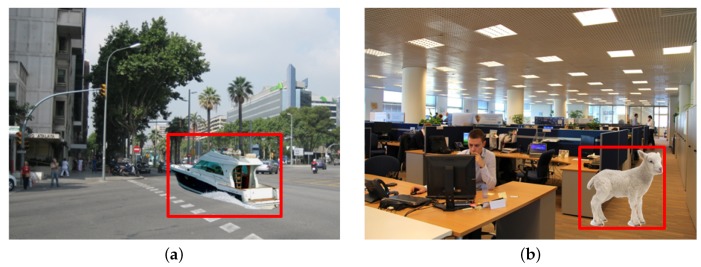
Traditionally, digital image forensics mainly focused on the low-level features of an image, such as edges and texture, because these features include traces of the image’s modification history. However, previous methods that employed low-level features are highly vulnerable, even to frequently used image processing techniques such as JPEG and resizing, because these techniques add noise to the low-level features. In this paper, we propose a framework that uses deep neural networks to detect image manipulation based on contextual abnormality. The proposed method first detects the class and location of objects using a well-known object detector such as a region-based convolutional neural network (R-CNN) and evaluates the contextual scores according to the combination of objects, the spatial context of objects and the position of objects. Thus, the proposed forensics can detect image forgery based on contextual abnormality as long as the object can be identified even if noise is applied to the image, contrary to methods that employ low-level features, which are vulnerable to noise. Our experiments showed that our method is able to effectively detect contextual abnormality in an image.
§ The Valyu brief
Reading the full paper and taking notes. This takes a few seconds…
§ Ask this paper
Ask a question about this paper
Valyu reads the full text and answers from what the paper actually says.
Searching the other archives…