Using Trial Sequential Analysis for estimating the sample sizes of further trials: example using smoking cessation intervention
Ravinder Claire, Christian Gluud, Ivan Berlin, Tim Coleman, Jo Leonardi-Bee
Abstract
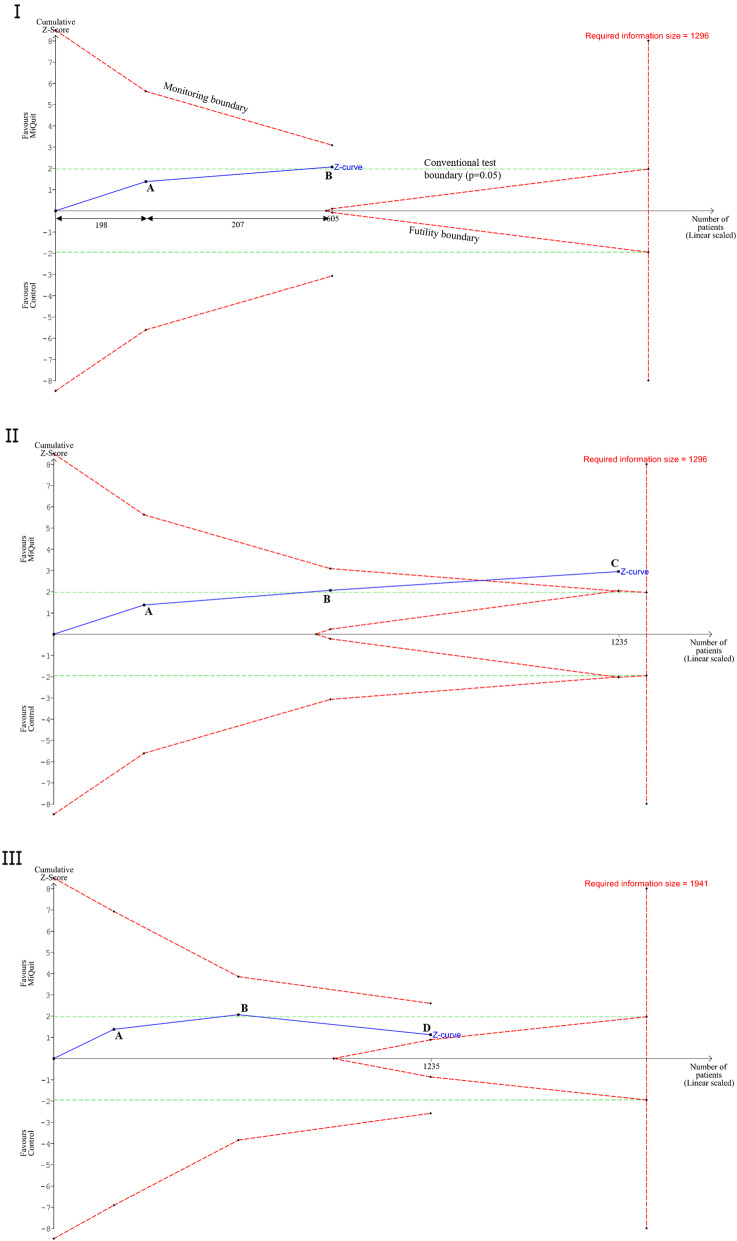
'Jo Leonardi-Bee'] Background Assessing benefits and harms of health interventions is resource-intensive and often requires feasibility and pilot trials followed by adequately powered randomised clinical trials. Data from feasibility and pilot trials are used to inform the design and sample size of the adequately powered randomised clinical trials. When a randomised clinical trial is conducted, results from feasibility and pilot trials may be disregarded in terms of benefits and harms. Methods We describe using feasibility and pilot trial data in the Trial Sequential Analysis software to estimate the required sample size for one or more trials investigating a behavioural smoking cessation intervention. We show how data from a new, planned trial can be combined with data from the earlier trials using trial sequential analysis methods to assess the intervention’s effects. Results We provide a worked example to illustrate how we successfully used the Trial Sequential Analysis software to arrive at a sensible sample size for a new randomised clinical trial and use it in the argumentation for research funds for the trial. Conclusions Trial Sequential Analysis can utilise data from feasibility and pilot trials as well as other trials, to estimate a sample size for one or more, similarly designed, future randomised clinical trials. As this method uses available data, estimated sample sizes may be smaller than they would have been using conventional sample size estimation methods.
§ The Valyu brief
Reading the full paper and taking notes. This takes a few seconds…
§ Ask this paper
Ask a question about this paper
Valyu reads the full text and answers from what the paper actually says.
Searching the other archives…