Combining biomedical knowledge graphs and text to improve predictions for drug-target interactions and drug-indications
Mona Alshahrani, Abdullah Almansour, Asma Alkhaldi, Maha A. Thafar, Mahmut Uludag, Magbubah Essack, Robert Hoehndorf, Shuihua Wang
Abstract
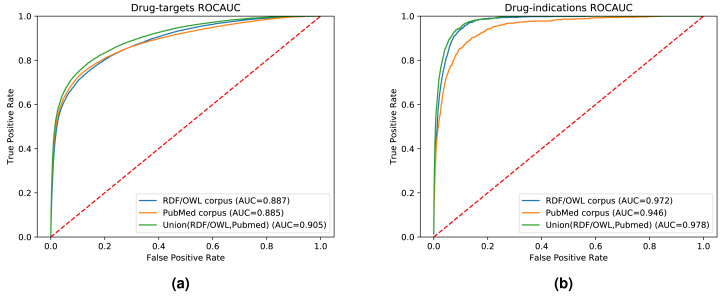
'Mahmut Uludag' 'Magbubah Essack' 'Robert Hoehndorf' 'Shuihua Wang'] Biomedical knowledge is represented in structured databases and published in biomedical literature, and different computational approaches have been developed to exploit each type of information in predictive models. However, the information in structured databases and literature is often complementary. We developed a machine learning method that combines information from literature and databases to predict drug targets and indications. To effectively utilize information in published literature, we integrate knowledge graphs and published literature using named entity recognition and normalization before applying a machine learning model that utilizes the combination of graph and literature. We then use supervised machine learning to show the effects of combining features from biomedical knowledge and published literature on the prediction of drug targets and drug indications. We demonstrate that our approach using datasets for drug-target interactions and drug indications is scalable to large graphs and can be used to improve the ranking of targets and indications by exploiting features from either structure or unstructured information alone.
§ The Valyu brief
Reading the full paper and taking notes. This takes a few seconds…
§ Ask this paper
Ask a question about this paper
Valyu reads the full text and answers from what the paper actually says.
Searching the other archives…