Resolving the Heterogeneous Tumor-Centric Cellular Neighborhood through Multiplexed, Spatial Paracrine Interactions in the Setting of Immune Checkpoint Blockade Multiplexed Analysis of the Tumor Immune Microenvironment
Rachel L.G. Maus, Alexey A. Leontovich, Raymond M. Moore, Laura Becher, Wendy K. Nevala, Thomas J. Flotte, Ruifeng Guo, Jill M. Schimke, Betty A. Dicke, Yiyi Yan, Svetomir N. Markovic
Abstract
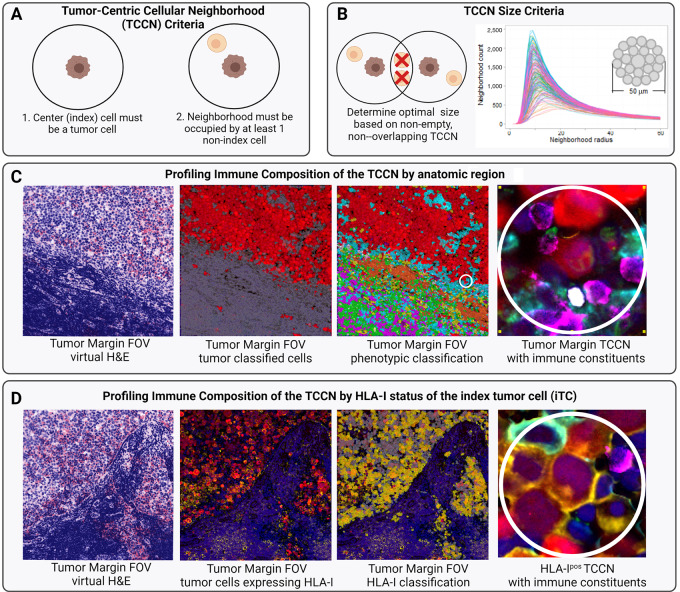
'Laura Becher' 'Wendy K. Nevala' 'Thomas J. Flotte' 'Ruifeng Guo' 'Jill M. Schimke' 'Betty A. Dicke' 'Yiyi Yan' 'Svetomir N. Markovic'] Direct interactions between tumor and immune cells mediate the antitumor effect of all modern cancer immunotherapeutic agents. Simultaneously, tumor cells have evolved mechanisms of evasion, including the downregulation of HLA-I, potentially disrupting the mechanism of action employed by many immune checkpoint inhibitors. And yet, the in situ interplay between these cells within the tumor immune microenvironment (TIME) remains elusive. Recent advances in histologic multiplex bioimaging platforms have enabled in-depth molecular characterization of single cells within spatially preserved and clinically archived tumor tissues. Herein, we applied multiplex immunofluorescence to excisional lymph node biopsies from 14 patients with metastatic melanoma who experienced clear objective responses to immunotherapy (7 complete response; 7 progressive disease) to determine distinguishing features of the TIME in the pretreatment setting. Distinct regions of the TIME were evaluated using 35 proteins probing tumor, immune, and vasculature components across 323 fields of view. Single-cell compositional analysis confirmed established prognostic immune cell types including increased prevalence of cytotoxic T cells within the tumor core fields of view of responders. Integrating single-cell quantification with the spatial arrangement of cellular neighborhoods surrounding tumor cells revealed novel, spatial immune signatures capable of stratifying TIME based on clinical response. Our analysis revealed dynamic cellular composition of the tumor-centric cellular neighborhood (TCCN) based on anatomic subregion, functional expression of HLA-I by the index tumor cell and ultimately clinical response to immunotherapy. Overall, this study provides an analytic framework to resolve the cellular complexity of the TIME, increasingly relevant to the outcomes of modern cancer immunotherapy.
§ The Valyu brief
Reading the full paper and taking notes. This takes a few seconds…
§ Ask this paper
Ask a question about this paper
Valyu reads the full text and answers from what the paper actually says.
Searching the other archives…