Robust segregation of donor and recipient cells from single-cell RNA-sequencing of transplant samples
Gavin W. Wilson, Allen Duong, Sajad Moshkelgosha, Gary Bader, Shaf Keshavjee, Tereza Martinu, Stephen C. Juvet, Jonathan C. Yeung
Abstract
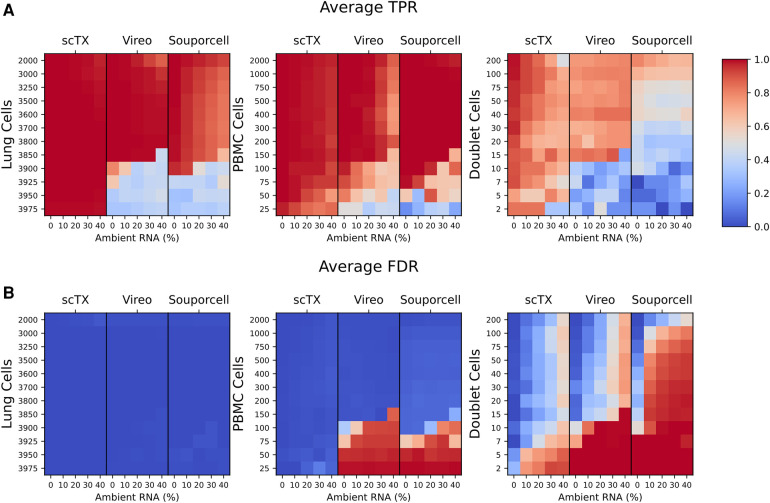
'Shaf Keshavjee' 'Tereza Martinu' 'Stephen C. Juvet' 'Jonathan C. Yeung'] Background Single-cell RNA-sequencing (scRNA-seq) technology has revealed novel cell populations in organs, uncovered regulatory relationships between genes, and allowed for tracking of cell lineage trajectory during development. It demonstrates promise as a method to better understand transplant biology; however, fundamental bioinformatic tools for its use in the context of transplantation have not been developed. One major need has been a robust method to identify cells as being either donor or recipient genotype origin, and ideally without the need to separately sequence the donor and recipient. Methods We implemented a novel two-stage genotype discovery method (scTx) optimized for transplant samples by being robust to disparities in cell number and cell type. Using both in silico and real-world scRNA-seq transplant data, we benchmarked our method against existing demultiplexing methods to profile their limitations in terms of sequencing depth, donor and recipient cell imbalance, and single nucleotide variant input selection. Results Using in silico data, scTx could more accurately separate donor from recipient cells and at much lower genotype ratios than existing methods. This was further validated using solid-organ scRNA-seq data where scTx could more reliably identify when a second genotype was present and at lower numbers of cells from a second genotype. Conclusion scTx introduces the capability to accurately segregate donor and recipient gene expression at the single-cell level from scRNA-seq data without the need to separately genotype the donor and recipient. This will facilitate the use of scRNA-seq in the context of transplantation.
§ The Valyu brief
Reading the full paper and taking notes. This takes a few seconds…
§ Ask this paper
Ask a question about this paper
Valyu reads the full text and answers from what the paper actually says.
Searching the other archives…