Making sense of expanding transcriptomic data: network-based approaches for studying reproduction in domestic and wild animal species
Olga Amelkina, Pierre Comizzoli
Abstract
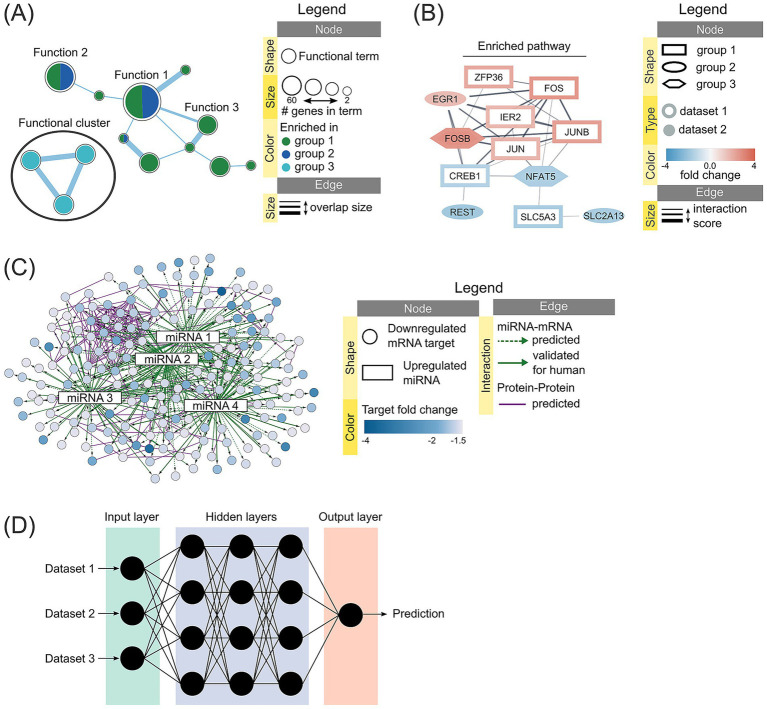
Transcriptomic datasets in animal reproductive biology are expanding rapidly, creating more opportunities to explore genome-phenome relationships, uncover biological mechanisms, and improve assisted reproductive technologies. This mini-review emphasizes the shift from single-gene analyses to a systems biology approach, where genes and pathways are studied within networks to capture their interactions and better understand biological systems. We show how network visualization can help synthesize knowledge from complex RNA-seq outputs and provide examples of tools and workflows suitable for species with different levels of data availability and annotation. Best practices for data generation and integration from various databases are discussed, highlighting the importance of high quality well-annotated datasets, transparent reporting, and the pitfalls of overinterpretation. Machine learning methods are explored as an analysis option for experiments with hundreds of data points. Ultimately, expanding available expression datasets for non-model species, combined with rigorous data processing and interpretation, will enable reproductive biologists to integrate network-based strategies into their research and advance reproductive science as well as conservation programs.
§ The Valyu brief
Reading the full paper and taking notes. This takes a few seconds…
§ Ask this paper
Ask a question about this paper
Valyu reads the full text and answers from what the paper actually says.
Searching the other archives…