Insights on the Effects of Resveratrol and Some of Its Derivatives in Cancer and Autoimmunity: A Molecule with a Dual Activity
Elena Gianchecchi, Alessandra Fierabracci
Abstract
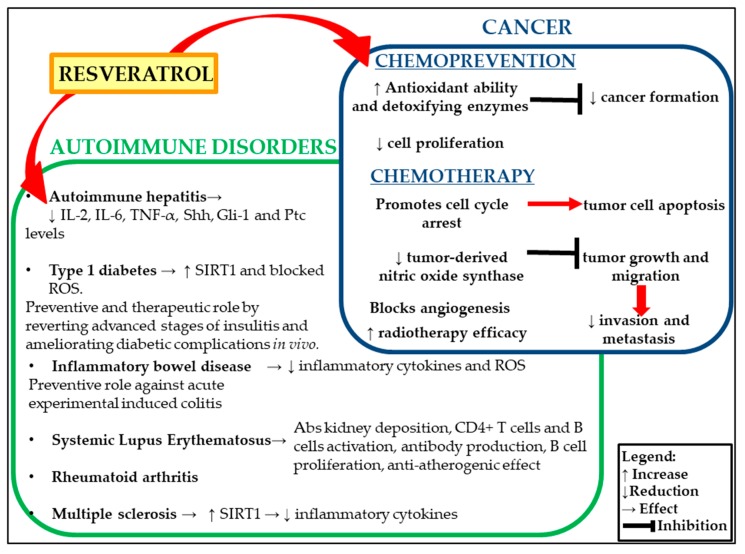
In recent years, the interest in natural compounds exerting immunoregulatory effects has enormously increased. Among these, the polyphenol resveratrol, found in a variety of foods and beverages, including red grapes and red wine, has been demonstrated to exert both in vitro and in vivo biological activities. More specifically, it has antiaging, cardioprotective, antioxidant, immunomodulatory, anti-inflammatory and chemopreventive activities. Due to its anti-proliferative, pro-apoptotic and immunoregulatory effects, resveratrol has gained substantial attention for the treatment of cancer or autoimmunity, which represent frequently diagnosed diseases with important consequences for the health of the patients affected. The aim of the present review is to focus on the role of resveratrol in the modulation of cancer as well as of several organ-specific or systemic autoimmune diseases, including autoimmune hepatitis, type 1 diabetes mellitus, inflammatory bowel disease, rheumatoid arthritis, systemic lupus erythematosus and multiple sclerosis.
§ The Valyu brief
Reading the full paper and taking notes. This takes a few seconds…
§ Ask this paper
Ask a question about this paper
Valyu reads the full text and answers from what the paper actually says.
Searching the other archives…