Life in The Context of Order and Complexity
Christian Mayer
Abstract
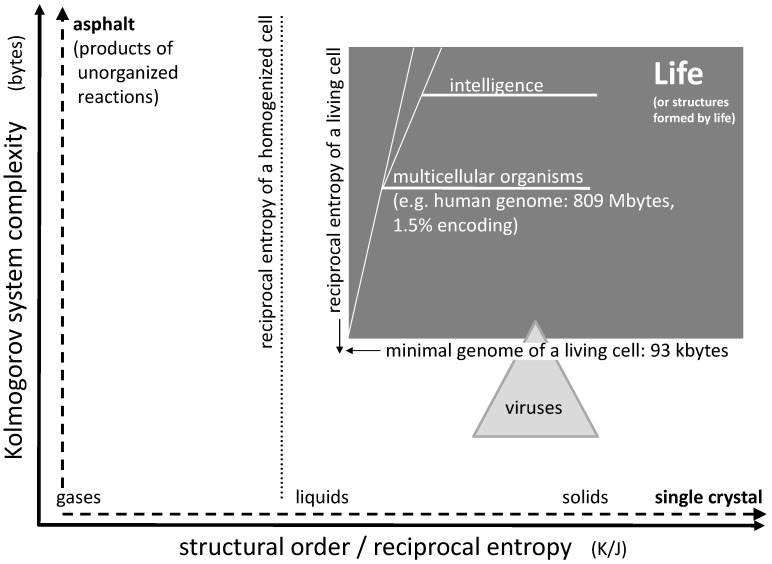
It is generally accepted that life requires structural complexity. However, a chaotic mixture of organic compounds like the one formed by extensive reaction sequences over time may be extremely complex, but could just represent a static asphalt-like dead end situation. Likewise, it is accepted that life requires a certain degree of structural order. However, even extremely ordered structures like mineral crystals show no tendency to be alive. So neither complexity nor order alone can characterize a living organism. In order to come close to life, and in order for life to develop to higher organisms, both conditions have to be fulfilled and advanced simultaneously. Only a combination of the two requirements, complexity and structural order, can mark the difference between living and dead matter. It is essential for the development of prebiotic chemistry into life and characterizes the course and the result of Darwinian evolution. For this reason, it is worthwhile to define complexity and order as an essential pair of characteristics of life and to use them as fundamental parameters to evaluate early steps in prebiotic development. A combination of high order and high complexity also represents a universal type of biosignature which could be used to identify unknown forms of life or remnants thereof.
§ The Valyu brief
Reading the full paper and taking notes. This takes a few seconds…
§ Ask this paper
Ask a question about this paper
Valyu reads the full text and answers from what the paper actually says.
Searching the other archives…