Free Fatty Acid Receptors 2 and 3 as Microbial Metabolite Sensors to Shape Host Health: Pharmacophysiological View
Sidharth P. Mishra, Prashantha Karunakar, Subhash Taraphder, Hariom Yadav
Abstract
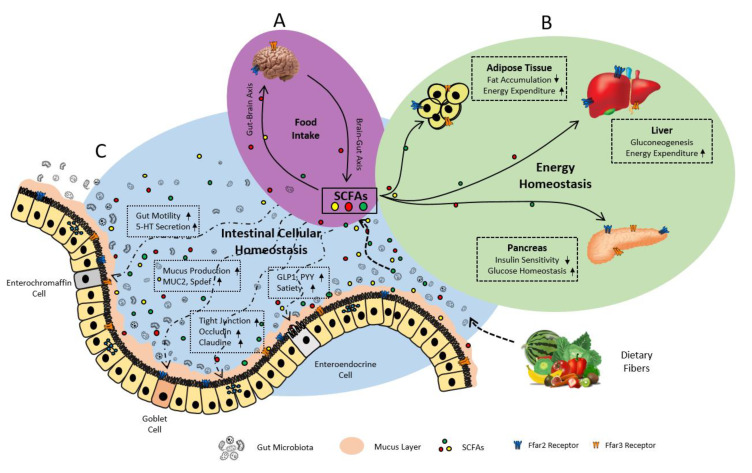
'Hariom Yadav'] The role of the gut microbiome in human health is becoming apparent. The major functional impact of the gut microbiome is transmitted through the microbial metabolites that are produced in the gut and interact with host cells either in the local gut environment or are absorbed into circulation to impact distant cells/organs. Short-chain fatty acids (SCFAs) are the major microbial metabolites that are produced in the gut through the fermentation of non-digestible fibers. SCFAs are known to function through various mechanisms, however, their signaling through free fatty acid receptors 2 and 3 (FFAR2/3; type of G-coupled protein receptors) is a new therapeutic approach. FFAR2/3 are widely expressed in diverse cell types in human and mice, and function as sensors of SCFAs to change several physiological and cellular functions. FFAR2/3 modulate neurological signaling, energy metabolism, intestinal cellular homeostasis, immune response, and hormone synthesis. FFAR2/3 function through Gi and/or Gq signaling, that is mediated through specific structural features of SCFAs-FFAR2/3 bindings and modulating specific signaling pathway. In this review, we discuss the wide-spread expression and structural homologies between human and mice FFAR2/3, and their role in different human health conditions. This information can unlock opportunities to weigh the potential of FFAR2/3 as a drug target to prevent human diseases.
§ The Valyu brief
Reading the full paper and taking notes. This takes a few seconds…
§ Ask this paper
Ask a question about this paper
Valyu reads the full text and answers from what the paper actually says.
Searching the other archives…